





By online editor
The Adolescent Girls Initiative for Learning and Empowerment (AGILE) Project has trained media practitioners in Borno State on effective reporting and advocacy to promote girls’ education and strengthen public support for the programme.
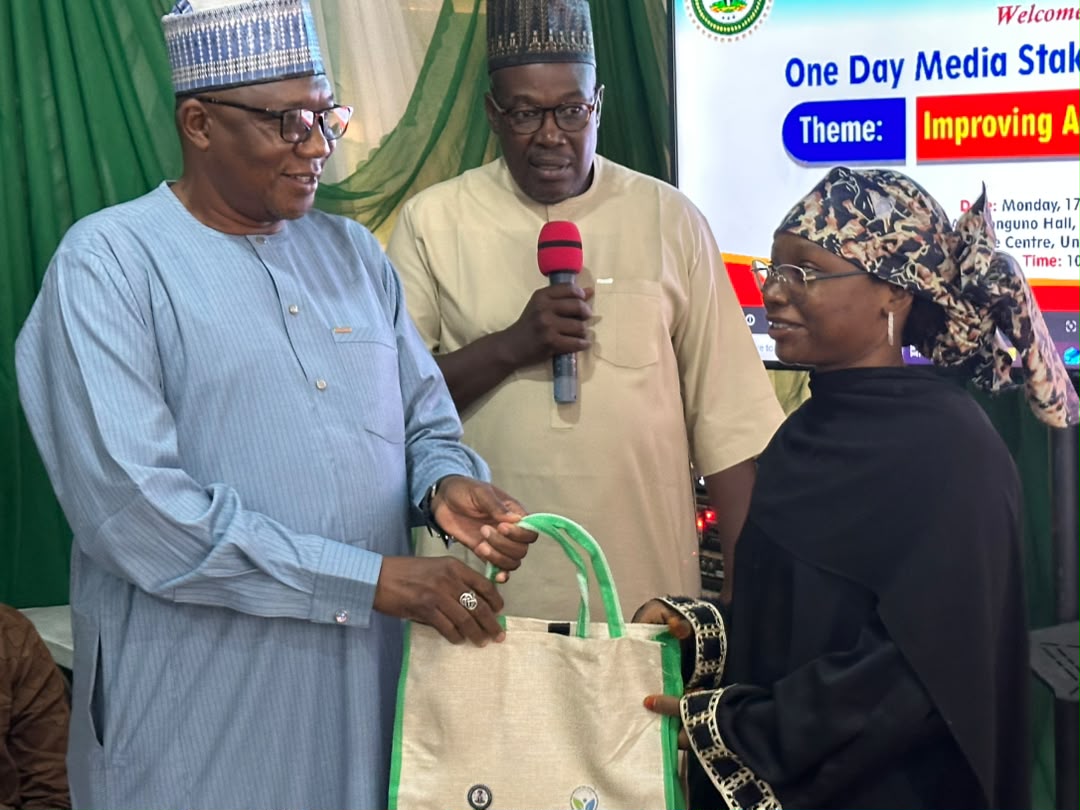
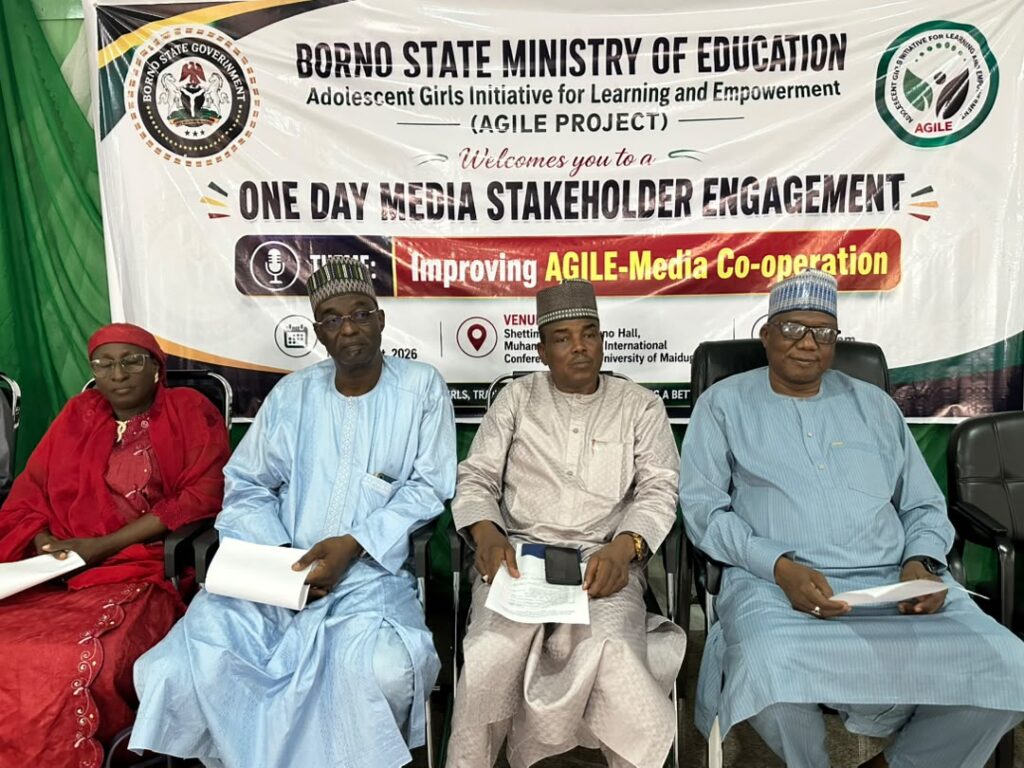
The training, organised by the Borno State Ministry of Education through the AGILE Project and themed “Improving AGILE–Media Cooperation,” was held on Monday in Maiduguri.
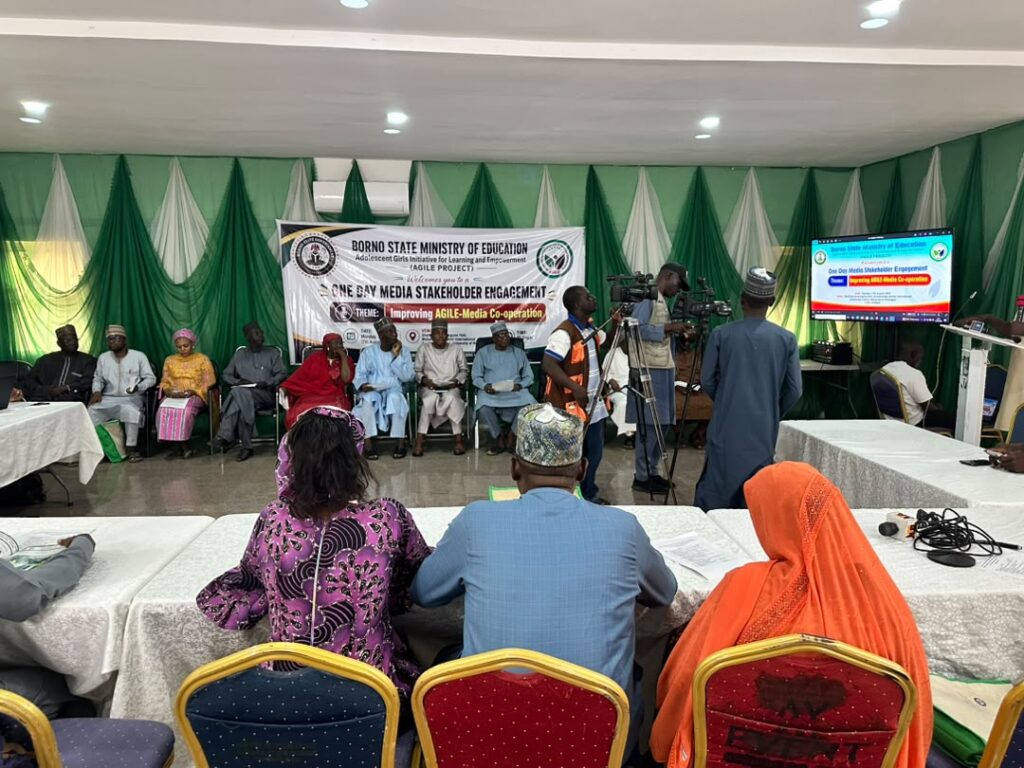
Declaring the training open, the Borno AGILE Coordinator, Engr Ibrahim Baba, said the media had a critical role to play in creating awareness about the programme and mobilising communities to support girls’ education.
He said effective reporting would help draw attention to the barriers preventing girls from enrolling in and completing school, while also informing the public about interventions aimed at addressing the challenges.
Baba said AGILE was providing “second chance” opportunities for girls who had dropped out to return to school, while expanding access through the construction of junior and senior secondary school blocks closer to communities.
He added that more than one million girls had been engaged in life skills, financial literacy and digital literacy programmes designed to prepare them for the modern workforce.
According to him, sustained media engagement was essential to ensuring that the interventions reached more beneficiaries and that parents and communities understood the importance of educating girls.
Speaking on the challenges confronting girl-child education, Malam Muhammad Auwal said about 7.6 million girls were out of school in Nigeria, with nearly half of them in Northern Nigeria.
He attributed the situation to poverty, early marriage, harmful cultural practices and unsafe learning environments, urging journalists to give greater attention to the factors limiting girls’ access to education.
Auwal also called for stronger engagement with religious and community leaders, saying their influence could help change attitudes and encourage families to prioritise girls’ education.
He urged the media to intensify reportage, advocacy and public awareness on the importance of girls’ education, particularly through localised stories that reflected the experiences of affected communities.
Also speaking, the training consultant, Dr Musa Konduga, said changing parental attitudes was crucial to addressing the challenges facing girls’ education.
He urged governments in Northern states to adopt community- and family-based engagement strategies that would encourage parents to value and prioritise the education of their daughters.
Konduga urged media practitioners and education stakeholders to use the knowledge gained from the training to strengthen reporting, advocacy and public awareness in support of girls’ education under the AGILE programme.
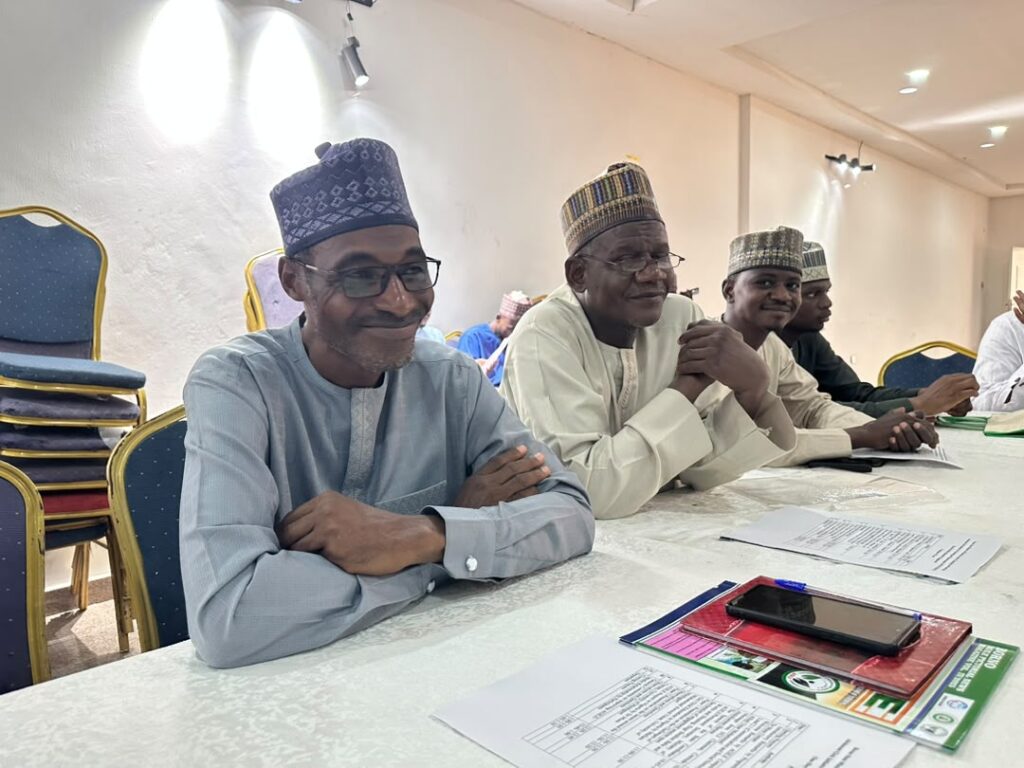
The training brought together media practitioners and education stakeholders as part of efforts to strengthen collaboration between the media and AGILE in promoting girls’ access to education and skills.