






Daily Hope24 News Desk
The North East Development Commission (NEDC) has taken a major step towards improving specialist healthcare delivery in the North-East by equipping the Maiduguri Eye Hospital with modern ophthalmology equipment and commencing a two-week intensive training programme for medical personnel.
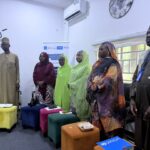
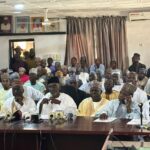
The programme was flagged off on Monday at the hospital and involves the installation, configuration and testing of the newly supplied equipment, alongside hands-on clinical and technical training for ophthalmologists, resident doctors and health technicians.
Speaking during the flag-off, NEDC Managing Director, Mohammed Goni Alkali, reaffirmed the Commission’s commitment to upgrading healthcare services in the region through targeted investments in infrastructure, equipment and human capacity.
He said the intervention was informed by earlier assessments which revealed that much of the hospital’s equipment had become obsolete and required urgent replacement to meet modern standards of care.
According to him, the newly installed facilities are fully operational and ready to support diagnosis, treatment and surgical procedures.“Our goal is not just to supply equipment, but to ensure that it is properly utilised and sustained,” Alkali said.
“That is why we are combining equipment deployment with structured training for those who will operate and maintain them. ”The training is being led by Professor Abdull Mohammed Mahdi, a Chief Consultant in Ophthalmology, with support from Dr Abuh Sunday, also a Chief Consultant in Ophthalmology, and a team of specialists in ophthalmology and biomedical engineering.
Participants include consultant ophthalmologists, resident doctors, ophthalmic nurses, optometrists and biomedical engineers from the Maiduguri Eye Hospital and the University of Maiduguri Teaching Hospital.
The programme is designed to strengthen surgical and diagnostic capacity, improve outcomes for patients with conditions such as cataract and glaucoma, and enhance the hospital’s ability to deliver safe, efficient and modern eye-care services.
It also supports the long-term objective of positioning the Maiduguri Eye Hospital as a regional centre of excellence for ophthalmic care.
Beyond training, the Commission is also undertaking infrastructure upgrades and renovation works at the hospital to improve clinical spaces, support the use of modern equipment and enhance patients’ experience.
These efforts reflect NEDC’s integrated approach to health sector development. Alkali noted that similar ophthalmic interventions are being implemented across the North-East, including the construction of an ultra-modern Eye Institute at the Abubakar Tafawa Balewa University Teaching Hospital (ATBUTH) in Bauchi, which is scheduled for accelerated completion this year.
He added that the Commission’s health sector interventions extend beyond eye care, stressing that NEDC has continued to invest in hospitals and tertiary health institutions across the six states of the North-East, alongside the training and retraining of health workers.
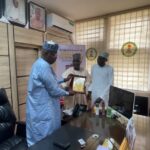
The Managing Director acknowledged the role of Zaramat Global Company Limited, which collaborated with the Commission on the equipment deployment and training programme, describing the partnership as critical to the success of the intervention.